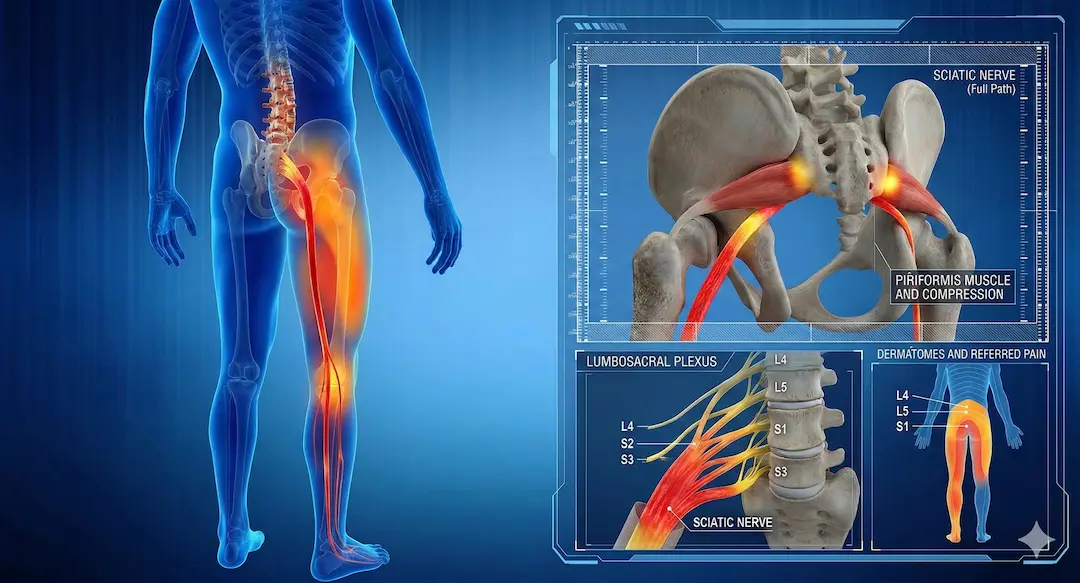
If you woke up this morning and the first thing you felt was that familiar ache in your lower back — or that burning, electric sensation shooting down your leg — I want you to know something important: you are not imagining it, and you are not exaggerating.
Sciatic nerve pain is one of the most disabling conditions I see in my practice. I’ve had patients who couldn’t get out of bed without wincing. Patients who gave up morning walks, stopped playing with their grandchildren, and started sleeping in a recliner because lying flat became unbearable.
And the most heartbreaking part? Many of them had already tried everything. Ibuprofen. Physical therapy. Chiropractic adjustments. Injections. Some got temporary relief. Most didn’t. And all of them kept wondering the same thing: “Why is nothing working?”
Today I want to give you 5 practical things you can start doing right now. The first four are grounded in solid clinical practice and will give you real, meaningful relief. But it’s the fifth one that I want you to pay special attention to — because it addresses something that most conventional treatments completely ignore, and it may be the missing piece you’ve been looking for.
1️⃣ Fix How You Sit — Your Posture Is Compressing the Nerve Every Day
Most of my patients spend 6 to 10 hours a day sitting — at a desk, in a car, on the couch. And most of them are unknowingly crushing their sciatic nerve every single hour they do it.
When you sit with poor posture — pelvis tilted back, legs crossed, spine rounded — you create direct mechanical pressure on the nerve. Over months and years, that constant compression builds up. Think of it like stepping on a garden hose all day and wondering why the water pressure is off.
Three adjustments that make an immediate difference:
- Keep both feet flat on the floor — never crossed
- Sit with your hips slightly higher than your knees
- Stand up and walk for at least 2 minutes every 30 to 45 minutes
These changes won’t cure your sciatica on their own, but they remove a daily source of aggravation that makes everything else harder to heal.
2️⃣ Gentle Stretching — Done Right, It Can Ease the Pressure Almost Immediately
I always warn my patients: not all stretching is helpful for sciatica. The wrong movements can actually flare up symptoms. What you want are slow, controlled stretches targeting the muscles that directly surround the sciatic nerve — especially the glutes, piriformis, and hip flexors.
✔ Stretch 2 to 3 times per day
✔ Hold each position for 20 to 30 seconds
✔ Never push into sharp pain — mild tension is the goal
Focus on these three areas above all others:
- Glute and piriformis muscles (the nerve often gets compressed here)
- Hip flexors and outer hip
- Lower lumbar and hamstrings
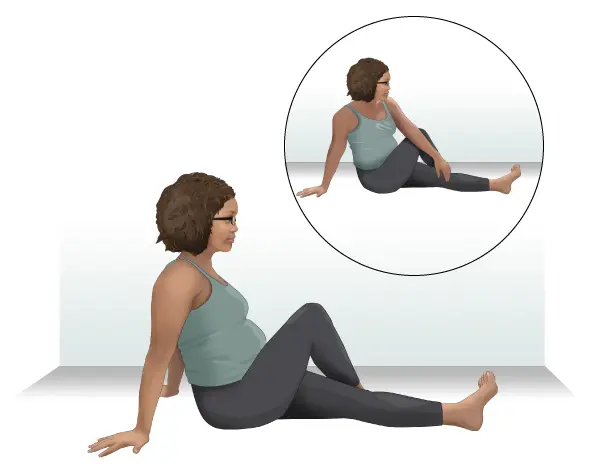
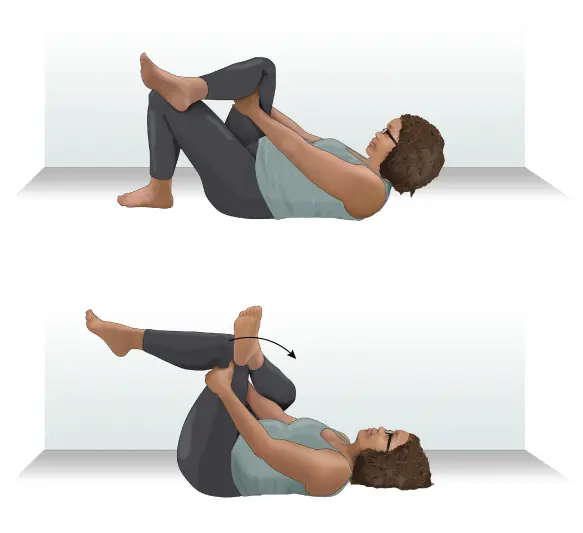
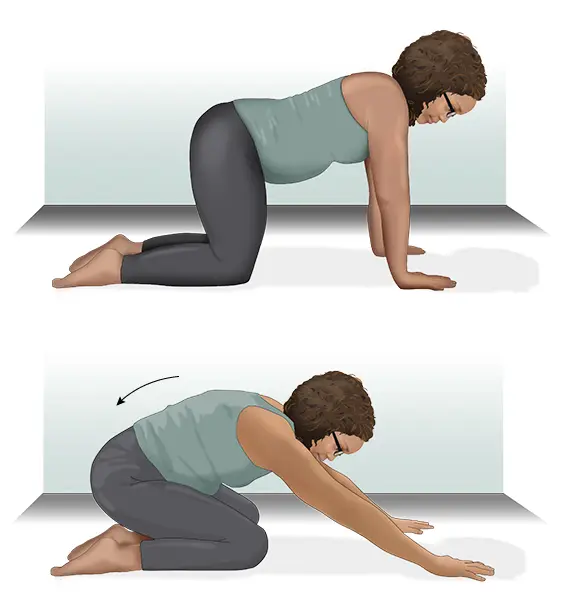
3️⃣ Strengthen the Muscles Around the Nerve — Stability Is Protection
Stretching relaxes tight muscles. But strengthening the right ones creates a protective scaffold around the sciatic nerve — reducing the chance of compression coming back. The key muscles to target are the deep core stabilizers, glutes, and lower back extensors.
✔ Train once or twice per day
✔ Aim for 10 to 12 repetitions per movement
✔ Complete 2 sets, resting 60 seconds between them
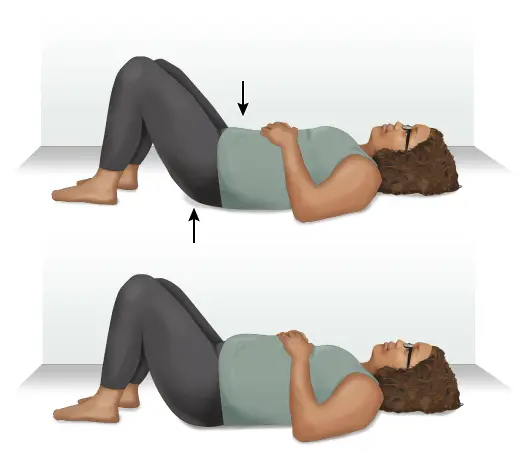
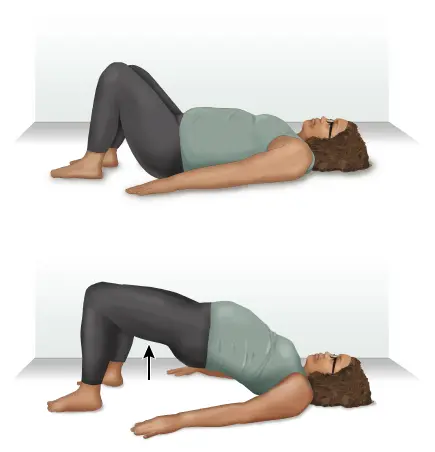
Start with low-impact movements like the bird-dog, glute bridge, and side-lying clamshell. These activate the right muscles without loading the spine in a way that worsens pain.
4️⃣ Change What You Eat for 7 Days — Inflammation Is Fueled from the Inside
This one surprises many of my patients. But the research is clear: what you eat directly affects the level of inflammation throughout your body — including around the sciatic nerve.
You don’t need a complete diet overhaul. Just try this for 7 days and notice how your pain responds:
Reduce or Eliminate:
- Fried and ultra-processed foods
- Added sugar and refined carbs
- Vegetable oils high in omega-6 (soybean, corn)
- Alcohol and excess caffeine
Add More Of:
- Fatty fish (salmon, sardines) — rich in omega-3
- Leafy greens and colorful vegetables
- Garlic, turmeric, and ginger
- Water — at least 8 glasses per day
Many patients report a noticeable reduction in the intensity of their pain within the first week of making these changes alone. Inflammation isn’t just something that happens to your joints — it wraps around your nerves too.
5️⃣ The Root Cause Nobody Talks About — And Why Most Treatments Only Mask the Pain
Here’s what frustrates me most about conventional sciatic pain treatment: it almost always targets the symptom, not the cause.
Ibuprofen reduces pain signals — temporarily. Injections suppress inflammation — for a few weeks. Physical therapy strengthens the surrounding muscles — which helps, but only up to a point. None of these approaches address what recent research suggests may be the actual underlying driver of chronic sciatic pain.
A growing body of scientific evidence now points to something happening inside the nerve itself — a process of deterioration that, if left unaddressed, continues regardless of how many painkillers you take or how many sessions of therapy you attend. It’s one of the reasons why so many people do “everything right” and still wake up in pain every morning.
I recently came across the work of Dr. Ethan Keller, a pain specialist who has spent years researching exactly this process. His findings — and the approach he developed to address it — are unlike anything I’ve seen in conventional medicine. I’ve been recommending his free video presentation to patients who feel stuck, and the feedback has been remarkable.
In the presentation, Dr. Keller explains in plain language:
- Why the pain keeps coming back even after treatment
- The hidden internal process that conventional medicine ignores
- A simple home test to check if this is happening to you right now
- What he discovered that has already helped tens of thousands of people find lasting relief
It’s free to watch. If you’ve been struggling with sciatic pain for more than a few months — especially if you’ve already tried the standard treatments without lasting results — I strongly encourage you to watch it when you have a quiet moment to focus.

A Final Word from Dr. Mitchell
If you’ve been living with sciatic nerve pain for months or years, I want you to hear this clearly: it is not normal, and you do not have to accept it as your new reality.
The four tips above will help you manage your symptoms and give your body better conditions to heal. Start them today. But if you’ve been dealing with this for a long time — if the pain keeps coming back no matter what you try — then please take the time to watch Dr. Keller’s presentation.
You deserve to walk without fear. To sleep through the night. To be fully present with the people you love. Don’t let another year go by just managing the pain. Find out what’s actually causing it.
